
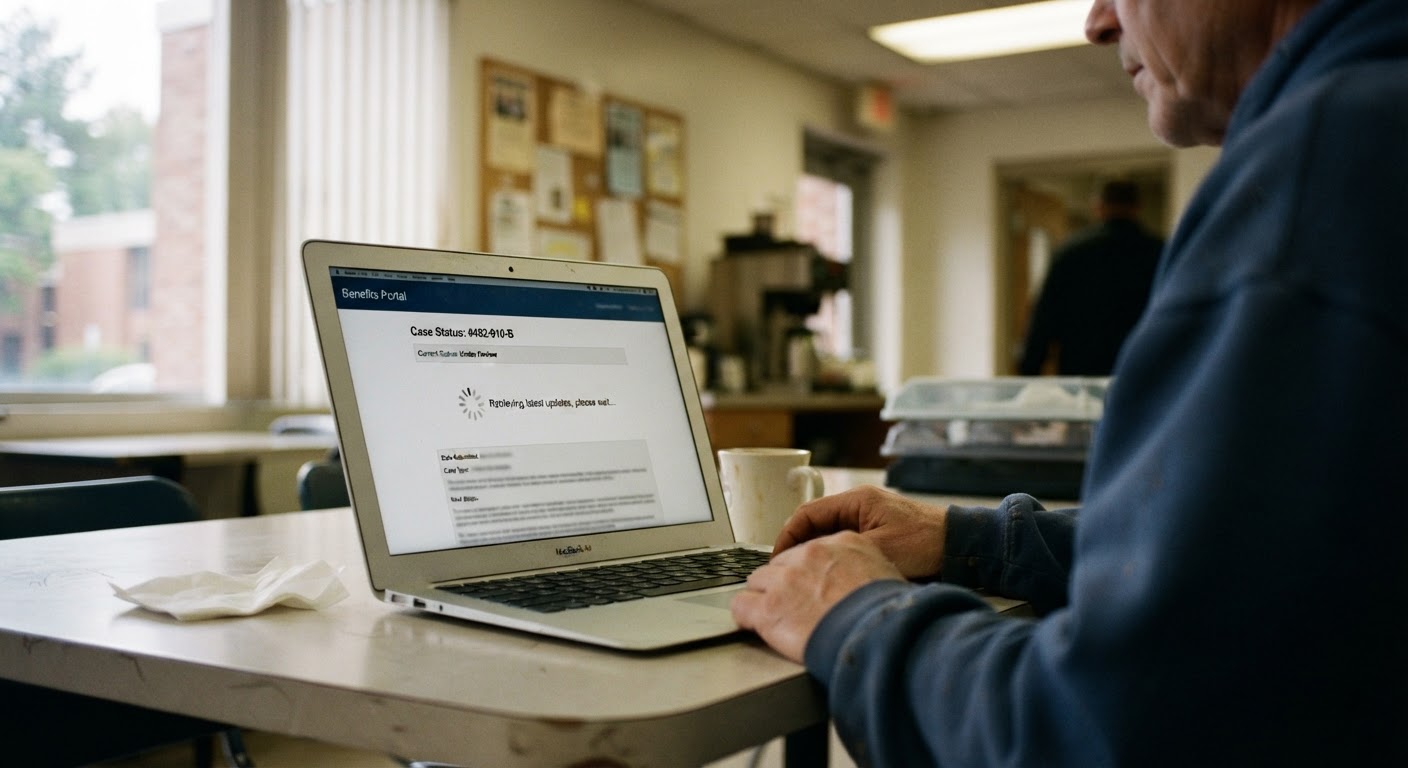
What “pending review” typically means on the back end versus what it implies to applicants
When a portal shows “pending review,” it is almost always a generic label pulled from a case management system that only has a handful of status codes to choose from. On the agency side, that label can mean several very different things: your application is sitting in an unassigned queue waiting for a worker to be given the case, it has been assigned and the worker is actively gathering documents or running verifications, it is waiting on a supervisor sign-off, or it is complete on the caseworker’s end and waiting for a batch process to run before a determination letter goes out. The portal usually cannot distinguish between these, so it defaults to the same phrase whether your case has been untouched for three weeks or is one keystroke away from approval.
To applicants, “pending review” reads as “someone is looking at this right now.” That is often not true. It is safer to read it as “this has not yet reached a decision point,” with no information about whether anyone is actively working it today, this week, or at all. Treating the label as a placeholder rather than a progress update will save you from both false reassurance and unnecessary panic.
Common portal status labels and roughly how long each should last
Most state and county portals cycle through a similar set of labels, even though the exact wording varies by system and program. Knowing the rough sequence helps you judge whether your case is moving at a normal pace or has stalled.
Received or Submitted usually appears within a day or two of you filing the application, whether online, by mail, or in person. This confirms intake, not review. It can sit here for a few days while the case is logged into the system.
Pending Review or In Process is the broadest and longest-lasting label. Depending on the program and the office’s current workload, this can reasonably last anywhere from two to six weeks. Programs with federal processing deadlines, such as SNAP, generally should not sit in this status past the statutory decision window without some other status change, like a request for information, appearing alongside it.
Verification Needed, Additional Information Requested, or similar labels mean the agency is waiting on you, not the other way around. These should come with a specific list of documents and a due date, either in the portal or in a mailed notice. If you see this status but no corresponding request, that is worth a call on its own.
Interview Scheduled or Interview Pending should include a date. If the date has passed and the status has not updated, the system has lagged behind the actual interview.
Decision Pending or Final Review suggests the casework is done and a determination is being finalized administratively. This stage is usually short, often days rather than weeks, but it can stretch if the case requires supervisory approval.
Approved, Denied, Closed, or Terminated are outcome statuses. A written notice should follow, and that notice, not the portal, is the document that starts any appeal deadline.
These timeframes are general patterns, not guarantees, and they vary by state, by program, and by how backlogged a particular office is at a given time. Use them as a rough yardstick, not a promise.
Why the portal status can lag behind actual casework by days or weeks
Portals are usually a read-only window into a much larger case management system, and that window does not always refresh in real time. A few structural reasons account for most of the lag people notice.
First, many agencies update case files through overnight or weekly batch processes rather than live updates. A worker can finish an action on your case today, but the portal might not reflect it until the next scheduled data sync, which in some systems runs only once every few days.
Second, a caseworker may have completed the substantive work, such as verifying income or running an interview, but not yet closed out the corresponding step in the software, either because of workload or because the system requires several manual entries to move a case to the next stage.
Third, some actions taken outside the primary case system, like a phone interview logged in a separate scheduling tool or a document reviewed in a shared document management platform, may take longer to feed into the status you see, since it depends on integration between systems that were not always built to talk to each other cleanly.
None of this means the status is meaningless. It means the status is a snapshot with a delay, and the size of that delay is not something you can see from the outside. This is the main reason a call to a live worker will sometimes give you information the portal has not caught up to yet.
How to use the status change (or lack of one) to time a follow-up call
Rather than calling the moment you feel anxious, it helps to set a baseline and watch for movement, or the absence of it, over a defined window.
Note the date your application or renewal was submitted, and separately note the date the current status first appeared. Many portals do not show a status history, so writing this down yourself, even in a simple note on your phone, is the only record you will have.
Give the status a reasonable window to change before treating stagnation as a problem. As a general guide: if a “received” status hasn’t moved to “in process” or “pending review” within about a week, that is worth a check-in. If “pending review” has sat unchanged past the outer edge of the typical range for your program, described in the previous section, that is a reasonable point to call. If a verification request has no due date, or the due date has passed without any status change, call before that deadline lapses if at all possible, not after.
It is also worth checking the portal on a consistent schedule, such as once every few days, rather than repeatedly throughout the day. Frequent checking will not speed up a batch update cycle, and it can make normal lag feel more alarming than it is.
If your case has a scheduled interview or a specific decision deadline set by law or by a notice you received, use that date, not the general averages above, as your primary trigger for following up.
What information to have ready when you call to ask about a stalled status
A call about a stalled case goes faster, and gets you further, if you have a short set of facts ready before you dial. Have your case number or application number, which is usually visible on the portal itself or on any notice you have received. Have the exact date you submitted the application or renewal, and the exact date and wording of the current status shown online. Have the date and method of submission, such as online portal, mail, fax, or in person, since documents sometimes get logged under a different date than the one you remember.
If you were asked for documents, have a list of what you sent, when you sent it, and how, along with any confirmation number, mailing receipt, or upload confirmation you kept. If you had an interview, have the date it was scheduled and whether it took place as planned. If you have called before about this same issue, have the date of that call and, if you were given one, the name of the representative or a reference number for that contact.
When you reach someone, ask directly: has a worker been assigned to this case, is the agency waiting on anything from me right now, and if so, what and by when. Ask for a callback number or reference number for the call itself, and write down the date, the representative’s name if given, and what you were told. This record becomes important if the case stalls further or if you eventually need to show that you followed up in good faith.
When an unchanged status for too long is a sign to escalate rather than wait
Most stalled cases resolve with a single follow-up call. Some do not, and it helps to know the point at which continued waiting stops being the reasonable choice.
If you have called once, been told the case is “in process” with no further detail, and the status still has not changed after the amount of time the representative indicated, that is a reasonable point for a second call, this time asking specifically to speak with a supervisor or to have the case escalated. If the program has a legally defined processing deadline and that deadline has passed without a decision or a proper notice of delay, you generally have the right to ask about expedited handling or to file a complaint about the delay itself, separate from any eventual decision on the merits of your case.
If your case involves an urgent circumstance, such as a lapse in medication access or an imminent loss of housing, say so explicitly and ask whether the office has an expedited or emergency processing track, since many programs do but will not offer it unless you ask.
If phone follow-up repeatedly leads nowhere, look for other avenues available in your state, such as a caseworker’s direct line if you have one from a prior contact, an ombudsperson or client advocate office, or a local legal aid organization that handles benefits delays. These resources exist specifically for situations where the normal channel has stopped producing answers, and using them is not jumping ahead of the process, it is a normal part of it.