
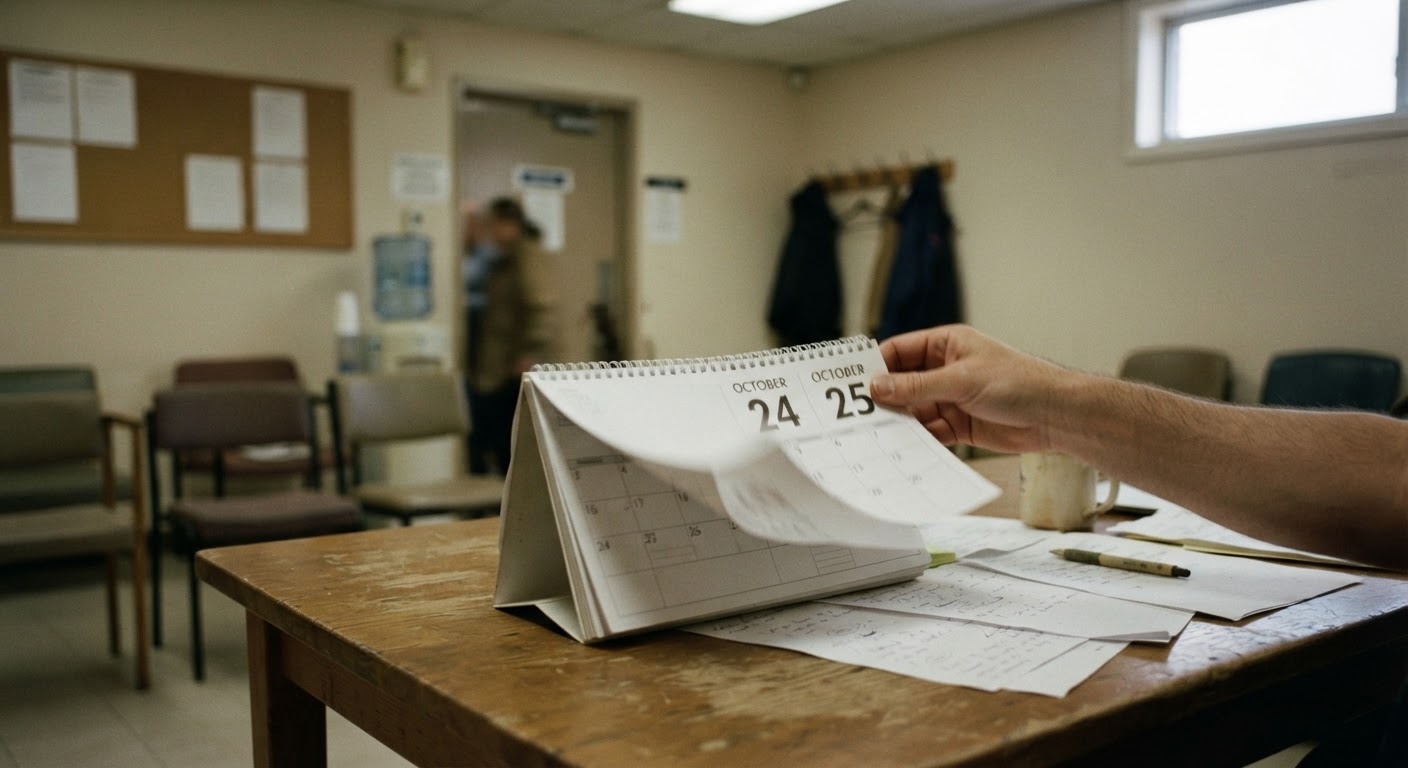
When a fair hearing gets postponed, most people assume they’re the one who asked for the delay. But agencies request postponements too, and when that happens, the rules that apply are not the same as when you request more time. If you’ve received a notice that the agency has asked to push back your hearing date, it’s worth understanding exactly what’s happening and what you’re entitled to do about it before you simply accept the new date.
Why agencies request postponements, and how it differs from your requesting one
Agencies typically ask to postpone a hearing for a handful of reasons: the caseworker assigned to your file is unavailable, the agency needs more time to prepare its evidence or documentation, there’s a staffing shortage on the hearing officer’s calendar, or the agency representative has a scheduling conflict with another hearing. None of these reasons reflect on the strength of your case. A postponement request from the agency is an administrative matter, not a signal about how your hearing is likely to go.
The important distinction is this: when you ask for a postponement, you are usually granted a limited number of them, and the delay is charged against your own timeline. When the agency asks for a postponement, that delay is charged against the agency, not against you. This matters because many benefit programs have rules about how quickly a hearing must be scheduled and decided after you file your appeal. If the agency’s request pushes the hearing past that window, the responsibility for the delay belongs to the agency, and that fact can become relevant later, particularly if you end up arguing for retroactive benefits or a faster resolution.
Because the reasons behind an agency’s request are internal to their own operations, you often won’t be told much more than “the agency has requested a postponement of your scheduled hearing.” That’s normal. You are not required to accept the request on faith, and you are not required to stay silent about it.
Where to find the notice of the agency’s postponement request
The notice of a postponement request should arrive the same way your original hearing notice did: by mail, and in some cases also through a client portal or email if the agency and hearing office use one. Read this notice carefully. It should tell you:
Who requested the postponement (the agency, not the hearing office itself), what the new proposed date is or whether a new date is still to be determined, and whether you have a deadline to respond if you want to object.
If the notice is vague about any of these points, particularly whether you have a right to object and how long you have to do it, call the hearing office directly and ask. Keep a written record of that call: the date, the name of the person you spoke with, and what they told you. Do not rely on a verbal assurance alone if the matter later becomes disputed.
If you did not receive a notice at all, and instead learned about the postponement some other way, such as a call to confirm your hearing time, ask for the notice to be sent to you in writing. You are entitled to documentation of any change to your hearing schedule, and you should not have to rely on a phone call as your only record of it.
Your right to object, and how to file that objection in writing
You generally have the right to object to an agency’s postponement request, particularly if the delay would create hardship for you, if the agency has already requested and received a previous postponement, or if you believe the request is not based on a genuine scheduling conflict. Objecting does not guarantee the hearing will proceed on the original date, but it puts your position on the record and requires the hearing officer to consider it before ruling on the agency’s request.
To object, write a short letter or use whatever form the hearing office provides. State plainly that you oppose the agency’s request for postponement, and explain why. If you are relying on continued benefits during your appeal and further delay affects your household’s ability to manage without those benefits, say so. If this is a repeat postponement request from the agency, note that specifically. Keep your objection factual and brief. You do not need to argue the merits of your underlying case in this letter; you only need to address the postponement itself.
Send your objection to the hearing office, not the agency caseworker, since the hearing officer is the one who will rule on the postponement request. Keep a copy of what you send, and if possible, send it in a way that gives you proof of delivery, such as certified mail or a dated fax or email confirmation. If your objection is denied and the hearing is postponed anyway, that is unfortunately within the hearing officer’s discretion in most systems, but your written objection still matters. It establishes on the record that the delay was not something you agreed to, which can be relevant later.
How a postponement affects your continued-benefits status while waiting
If you requested your fair hearing in time to keep receiving benefits while your case is pending, that continued-benefits status should not be affected simply because the agency asked for a postponement. The postponement changes the date of your hearing; it does not, on its own, change your standing to keep receiving benefits during the appeal.
That said, mistakes happen, and continued benefits sometimes get flagged for review or interrupted when a case sits open longer than expected. If a hearing postponement stretches your case out for weeks or months, check your benefit statements or portal regularly to confirm that continued benefits are still being issued. If you notice an interruption, contact the agency immediately and reference both your appeal and the postponement notice. Keep a record of that contact as well.
Do not assume that a long delay works in your favor by default just because your benefits continue. Depending on the outcome of your hearing, you may be required to repay benefits received during the appeal period if you ultimately lose. This is a separate question from who caused the delay, and it’s worth keeping in mind as the case stretches on.
Setting a firm expectation for a new hearing date
When an agency’s postponement request is granted, ask the hearing office for a specific new date rather than accepting an open-ended “to be rescheduled” status. An indefinite postponement is harder to track and easier to lose amid other paperwork. If the notice you received doesn’t include a firm new date, follow up in writing and ask when one will be set.
Some hearing systems have rules requiring that a rescheduled hearing be held within a certain number of days of the original date, or within a certain number of days of the agency’s postponement request. If you know or can find out whether such a rule applies in your case, reference it in your follow-up request. If you’re not sure whether such a timeframe exists, it is reasonable to simply ask the hearing office directly: “Is there a required timeframe for rescheduling after an agency postponement, and if so, what is it?”
Once you have a new date, treat it the same way you treated the original one: mark it clearly, prepare for it as though it will happen, and don’t assume it’s provisional just because the last one was postponed.
Documenting the delay in case it becomes relevant to a later claim for retroactive benefits
If your case is ultimately decided in your favor, you may be entitled to retroactive benefits covering the period your case was pending, including any period extended by the agency’s postponement. Having a clear record of who caused each delay, and how long each delay lasted, can matter when that calculation is made.
Keep a simple log for your own records: the date of the original hearing, the date you received notice of the agency’s postponement request, any objection you filed and when, the date of the new hearing, and any gaps in between. Keep copies of every notice related to the postponement, including the envelope or transmission date if it’s available, since mailing and receipt dates sometimes matter for timeline disputes. This kind of documentation is tedious to assemble after the fact, so building it as you go is far easier than reconstructing it later.
You don’t need to submit this log to anyone right away. It’s for your own reference, in case a question arises later about how long your case took to resolve and why.
What to do if the agency requests postponement more than once
A single postponement request from the agency is common and usually unremarkable. Repeated requests are different, and you are entitled to treat them differently. If the agency requests a second or third postponement, say so explicitly in your written objection, and ask the hearing office whether there is a limit on how many postponements an agency may request in a single case.
Many hearing systems place tighter scrutiny on repeated agency delays than on a single one, precisely because repeated postponements can function as a way of stalling a case indefinitely. If you believe that’s happening in your case, it is reasonable to say so in your written objection, calmly and factually, referencing the dates of each prior postponement request. You do not need to speculate about motive. Simply laying out the pattern of delay, in writing, with dates, is often enough to prompt the hearing office to take a firmer stance on scheduling.
If repeated postponements continue despite your objections, ask the hearing office what avenues exist to escalate the concern, such as requesting a supervisor’s review of the scheduling or asking for a written explanation of why an additional delay is necessary. Keep every request and every response in writing, and continue logging the timeline. A well-documented pattern of delay is your strongest tool if you need to raise the issue further.