
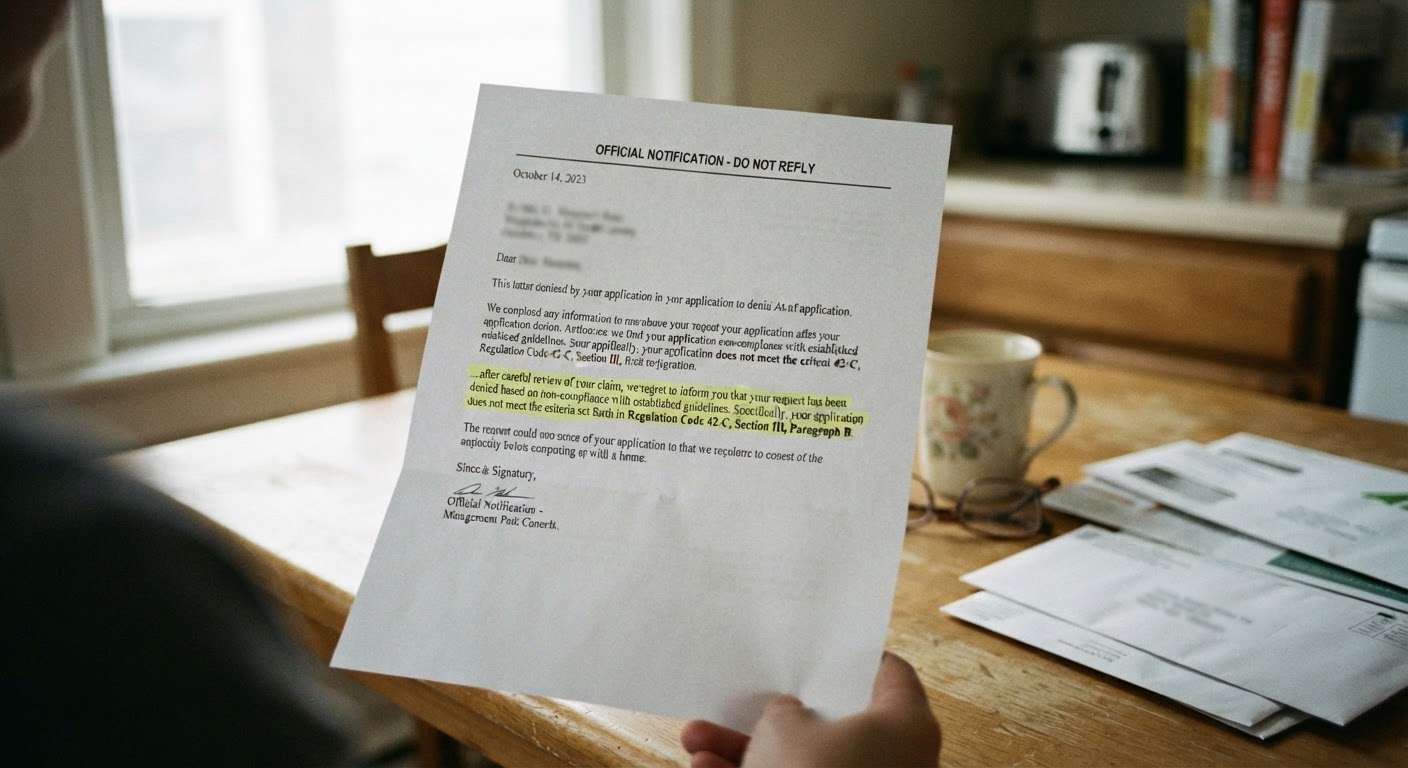
You open the envelope, brace yourself for the word “denied,” and then run into a second problem: the notice explains itself in a language you don’t speak. Something like “ineligible per 7 CFR 273.9(b)(1)” or “denied under Section 402(a)(7) of the state manual.” No explanation of what that section says, just the number. This is one of the most common sources of confusion in the benefits system, and it causes people to miss appeal deadlines simply because they’re stuck trying to decode the citation instead of filing. You don’t have to solve that puzzle before you act. Here’s how to work through it without losing time.
Why agencies cite statutes or codes instead of writing out the reason in full
Benefits agencies operate under strict documentation rules. Every denial, reduction, or termination has to be tied to a specific legal basis, both so the decision can be defended if appealed and so caseworkers apply rules consistently across thousands of cases. Citing the regulation number is the agency’s way of showing its work: it points to the exact rule a supervisor, hearing officer, or auditor would need to check.
The problem is that this system was built for internal accountability, not for the person receiving the notice. Caseworkers are often required to include the citation, but the underlying computer systems that generate notices don’t always translate it into plain language automatically. In some cases the notice does include a short explanation alongside the code, but the explanation is generic or copied from a template, which can feel just as unhelpful as the citation alone. Either way, the citation itself is real and specific. It refers to an actual rule that applied to your case, and tracking it down will tell you exactly what the agency believes happened.
Where to find the plain-language version of a state or federal benefits regulation
Most benefits programs are governed by a combination of federal regulations and state-level rules or manuals. If your notice cites something like “CFR” followed by a number, that’s a reference to the Code of Federal Regulations, which is searchable online in full text. Federal regulations tend to be written in dense legal language, but they’re usually organized in short, numbered subsections, so once you find the right section you can often narrow in on the specific sentence that applies to you.
If the citation instead references a state statute, administrative code, or a numbered section of a state agency’s policy manual, look for that state’s official benefits policy handbook, which many state agencies publish online for caseworkers and the public alike. These manuals are usually easier to read than raw federal regulations because they’re written for people actually applying the rule day to day. Searching the exact citation string, in quotation marks, along with the name of your state and the word “manual” or “handbook,” will often bring up the right page directly.
If you can’t find the exact language on your own, that’s normal. These systems weren’t built for easy searching, and citation formats vary by program and by state. Not being able to locate it yourself doesn’t put you behind; it just means you’ll need to ask someone who has faster access to the source material, which is covered in the next two sections.
How to ask your caseworker or agency to explain the cited rule in writing
You are generally entitled to ask the agency to explain the basis for its decision in terms you can understand, and doing so in writing creates a useful record. A short, direct request works best. State the date of the notice, quote the exact citation as it appears, and ask the agency to explain in plain language what that rule requires and how it was applied to your case. Ask for the response in writing as well, not just over the phone, so you have something to refer back to later.
When you call or write, it can help to say specifically that you intend to appeal and that you’re requesting this explanation to prepare your appeal, not as a separate complaint. Framing it this way tends to get a faster, more substantive answer, because the caseworker understands you’re not disputing their courtesy, you’re trying to understand the legal basis so you can respond to it properly.
Keep in mind that asking for this explanation does not pause your appeal deadline. Send the request as early as possible after receiving the notice, and don’t wait for a response before you also take the steps needed to file your appeal on time. Treat the explanation request and the appeal filing as two separate tracks moving in parallel, not one dependent on the other.
Using legal aid or benefits hotlines to translate regulatory language quickly
Legal aid organizations and benefits hotlines deal with these citations constantly, often for the exact same programs and the exact same handful of frequently cited rules. A quick call describing your notice, including the exact citation, can often get you a clear explanation faster than searching on your own, because the person on the other end may already recognize the section from other cases.
When you call, have the notice in front of you and be ready to read the citation exactly as written, along with the date of the notice and the name of the program. If the organization can’t take your case for full representation, many will still do a brief consultation focused on just this question: what does this rule mean, and does it appear to have been applied correctly based on what you’ve told them. That kind of limited help can still be enough to strengthen your appeal.
If a local legal aid office has a waitlist, ask whether they maintain a self-help guide or fact sheet for the specific program involved. Many organizations publish short explainers for the most commonly cited denial reasons, precisely because so many people call in with the same confusion over the same handful of code sections.
Why you don’t need to fully understand the citation to file a timely appeal
This is the point worth holding onto if nothing else in this article sticks: the appeal deadline does not wait for you to become fluent in regulatory language. You can file a timely, valid appeal while still working on understanding the cited rule. Your appeal request generally needs to state that you disagree with the decision and that you want it reviewed; it does not need to include a legal argument about why the citation was misapplied.
You can add that argument later, once you understand it, either in a supplemental written statement or in person at the hearing itself.
In fact, many hearing officers expect exactly this sequence. It’s common for someone to file the appeal first, then spend the weeks before the hearing gathering documents, requesting the plain-language explanation, and possibly getting help from legal aid to understand the specific rule. What matters most in the short term is that the appeal itself lands in the agency’s hands before the deadline. Everything else can be built afterward.
If you’re worried that filing “too early,” before you fully understand the basis for the denial, will hurt your case, set that concern aside. Filing early and refining your argument later is far better than missing the deadline while you wait to feel ready.
Keeping a copy of the cited regulation with your appeal paperwork for reference
Once you’ve located the actual text of the cited regulation, whether through your own research, a written response from the agency, or help from legal aid, print or save a copy and keep it with your appeal file. Note the date you found it and where it came from, in case you need to reference the source later.
Having the exact rule language on hand means you won’t have to search for it again under time pressure before a hearing.
It also gives you something concrete to compare against your own facts. Read the rule slowly, sentence by sentence, and note anything in it that seems to not match your situation as you understand it, any condition, exception, or requirement listed in the rule that you believe wasn’t accounted for. You don’t need to resolve those questions yourself. Bring them to your hearing, or to whoever is helping you with the appeal, as specific points to raise. A rule you’ve printed out and marked up is far more useful in that moment than a citation you never tracked down at all.
Keeping this document alongside your notice, your appeal request, and any correspondence with the agency also means your entire case history stays in one place. If your appeal moves forward to a hearing, having an organized file, with the cited rule right on top, will make it easier for you, or anyone assisting you, to speak to the specific basis for the denial rather than responding in general terms.