
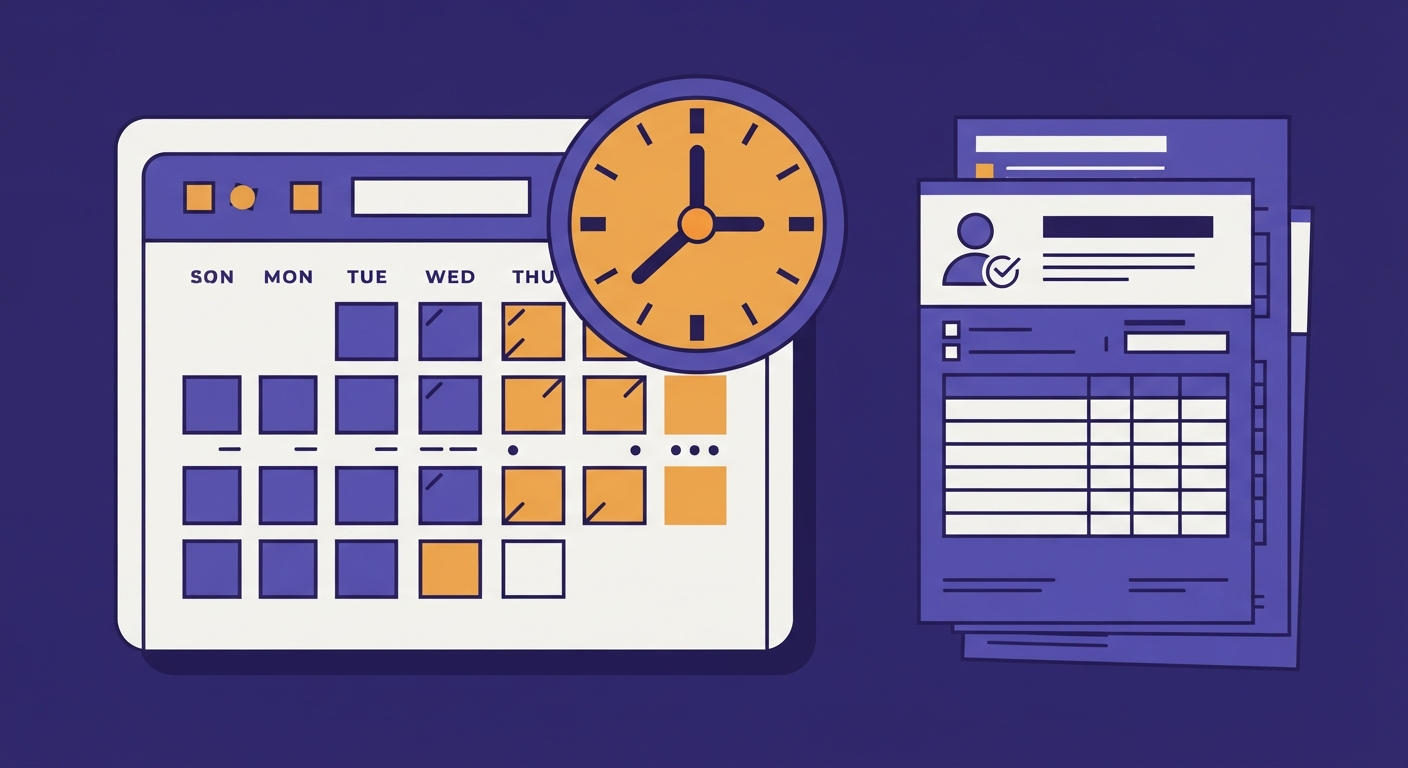
Why agencies batch applications into daily or weekly processing cycles
Most benefit offices do not process applications the instant they arrive. Instead, they collect everything that comes in during a set window — a day, a shift, sometimes a full week — and then run that batch through data entry, eligibility screening, and assignment to a caseworker as a group. This is partly a staffing reality: intake workers who spend the morning logging new applications usually spend the afternoon on something else, like interviews or verification calls. Batching lets an office move through repetitive tasks efficiently instead of stopping and starting all day.
It also has to do with how many state and county systems are built. Older eligibility software often runs overnight batch jobs that pull in everything submitted before a certain time and generate the paperwork, notices, and case numbers the next morning. If your application arrives after that nightly cutoff, it simply waits for the next run. This is not a punishment or a sign of disorganization — it is closer to how a mail sorting facility works. Your envelope is not lost; it is waiting for the next truck.
Understanding this rhythm matters because the clock on things like interview scheduling, request-for-information deadlines, and processing-time guarantees often does not start until your application is actually logged into the system, not the moment you drop it in a box or hit submit online. A one-day difference in when your file enters a batch can become a several-day difference in when a caseworker actually opens it.
How submitting near a cutoff time can push your file into the next cycle
If an office’s daily cutoff for new applications is, say, mid-afternoon, an application submitted at 8am and one submitted at 3:45pm the same day can end up a full processing cycle apart, even though both were turned in “today.” The 3:45pm submission may miss that day’s batch by minutes and get folded into tomorrow’s, or worse, into a batch that lands on a day the office is short-staffed.
Online portals can create the same effect even though they feel instant. Many portals accept your submission at any hour but only transfer new applications into the caseworker queue during specific system runs — often overnight. Submitting at 11pm might feel like you got it in “today,” but if the transfer job already ran at 9pm, your application effectively belongs to tomorrow’s cycle.
The practical takeaway is not that you should panic over minutes. It is that if you have any flexibility — if you are gathering documents over a day or two anyway — it is worth submitting earlier in the day rather than right before an office closes, and worth avoiding the very last day of a reporting or renewal period if you can submit a day or two ahead of it. Being one cycle earlier can mean your interview gets scheduled a week sooner, which matters if you are also tracking a benefit termination date or a documentation deadline.
Weekly and biweekly batching
Some offices batch less frequently than daily, especially for certain categories of applications like disability income claims that require additional routing to a different reviewing unit. If your application type is reviewed on a weekly cycle, the difference between submitting on a Monday versus a Friday can be the difference between one week and nearly two before anyone looks at the file. Asking directly about cycle length, covered further below, is more reliable than guessing.
Signs an office is near month-end capacity
Processing cycles do not run at a constant pace all month. Volume tends to climb toward the end of the month and the beginning of the next, because that is when a large share of renewals, recertifications, and reported-change deadlines land at once. If you can avoid submitting a new application during that window, your file has a better chance of moving through a lighter batch instead of a crowded one.
There are a few practical signs that an office is approaching or inside a high-volume stretch:
Recorded phone messages that mention longer-than-usual wait times, or a specific note that “due to high volume this month, response times may be delayed,” are a direct signal. Offices update these messages when they are genuinely behind, so take the wording seriously rather than assuming it is boilerplate.
Posted or mentioned staff furlough days, training days, or partial closures also compress the number of staff-hours available to process a given week’s batch. If a caseworker or the intake line mentions the office is short-staffed that week, plan for a slower cycle regardless of when you submit.
Longer hold times or callback windows than what you experienced in a previous month with the same office is another sign. If you called three weeks ago and got through in ten minutes, and today’s message quotes a much longer estimated wait, that is a reasonable indicator that volume has increased.
Waiting rooms or lobby lines that are visibly longer than usual, if you are submitting in person, can also tell you something, though this is the least reliable signal on its own since it varies by time of day.
None of these signs mean you should delay submitting something that has its own deadline attached, like a response to a request for information or a renewal packet. In those cases, timeliness matters more than which cycle you land in, and late submission risks are usually worse than slow processing. The timing strategies in this article are for situations where you have some control over exactly when to submit — a first-time application, a reapplication after a gap, or paperwork you are choosing to submit early.
How to ask a caseworker or intake line about current processing cycle length
The most reliable way to time a submission is simply to ask the office directly. Front-line staff on intake lines are usually willing to share general processing information, even if they cannot comment on your specific case. A few ways to phrase the question tend to get clearer answers than a general “how long will this take”:
“What is the current average time between when an application is received and when it’s assigned to a caseworker?” This asks about the batch-to-assignment gap specifically, rather than the full time to a decision, which involves many more variables.
“Is there a specific cutoff time each day after which new applications go into the next day’s batch?” Not every worker will know this detail, but intake staff who handle scanning or logging often do, since it affects their own workflow.
“Is this a particularly high-volume week or month for new applications right now?” This is a fair question to ask, and many staff will answer honestly, especially if they are currently dealing with a backlog and would rather set realistic expectations than field follow-up calls later.
If you reach a voicemail system instead of a live person, listen for volume disclaimers, and consider calling back at a different time of day, since some offices staff intake lines more heavily in the morning than the afternoon. Written correspondence, such as an email through a client portal, can also work, but expect a slower reply than a phone call, so build in extra time if you are trying to make a decision about when to submit.
It is reasonable to write down the name of the staff member you spoke with and the date of the call. If a processing delay later becomes a dispute — for instance, if you were told a cycle was five business days and it turned into three weeks — having a record of what you were told and when can support a request for expedited handling or a complaint about delay.
What to do if you must submit urgently regardless of timing
Sometimes there is no room to wait for a better cycle. A termination notice with a hard deadline, a medical need, or a lapse in current coverage can mean you have to submit today, at whatever hour you finish the paperwork, regardless of where it lands in the batching schedule. In that case, timing strategy takes a back seat to two other priorities: proof of submission and follow-up.
Always get a timestamped confirmation of exactly when and how you submitted — a portal confirmation screen or email, a fax transmission report, a certified mail receipt, or a written date-stamp if submitting in person. This matters regardless of cycle timing, because if your application later appears to have been logged a day or two after you actually submitted it, this record lets you show the correct date, which can affect benefit start dates and appeal deadlines.
If your situation is urgent because of an immediate risk to health, housing, or income, ask directly whether the program has an expedited or emergency processing track. Many benefit programs have a separate, faster process for cases meeting specific urgent criteria, and asking the intake worker by name — “Does this program have an expedited service option, and how do I request it?” — is more effective than describing your situation and hoping staff volunteer the option.
Finally, follow up rather than waiting silently. A short call three to five business days after submission to confirm that your application was received and logged, and to ask for a case or confirmation number if you do not already have one, costs little time and can catch a batching or data-entry problem early, before it turns into a missed deadline you cannot fix later.