
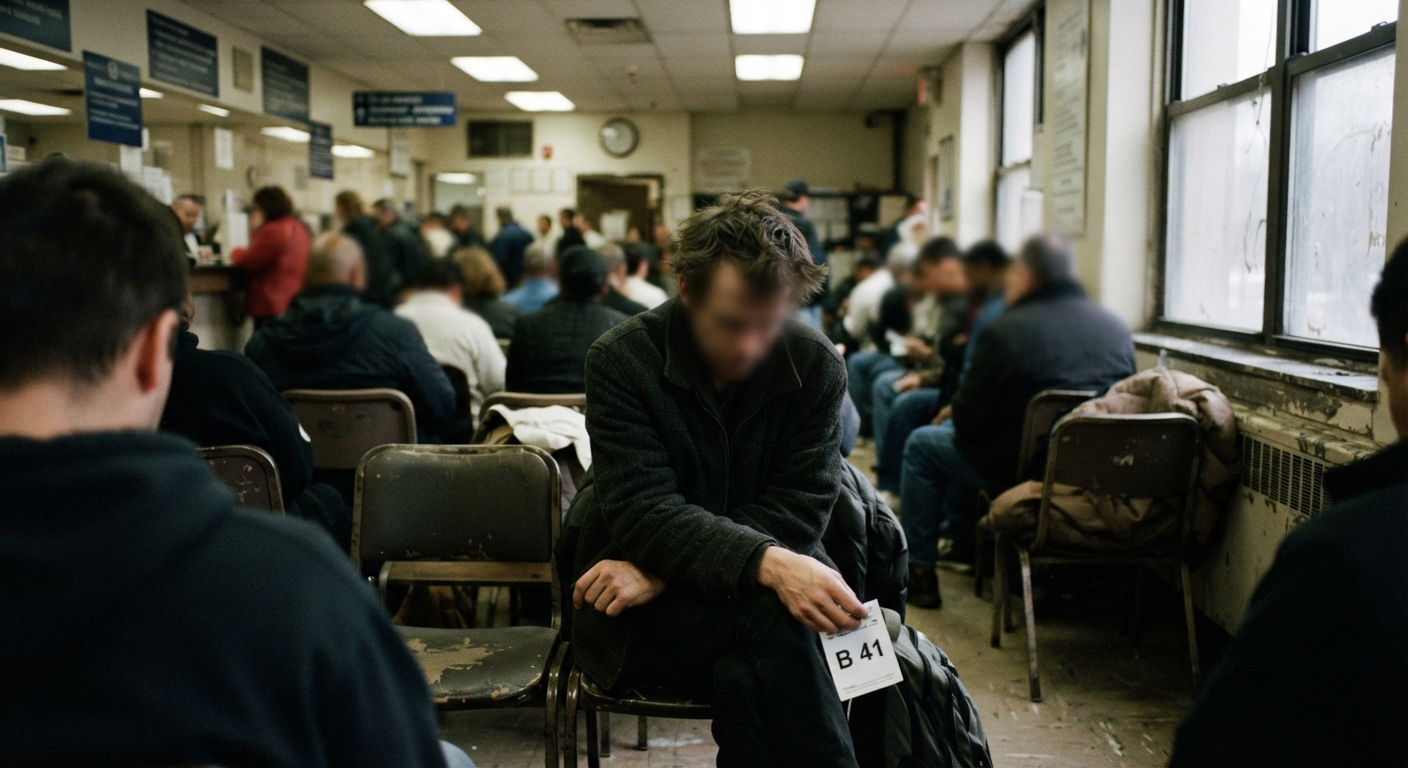
Why In-Person Offices Often Run Behind Schedule
Benefits offices schedule appointments in blocks, but the work inside each appointment is not uniform. One interview might take ten minutes because the applicant has every document ready. The next might take forty-five because a case is complicated, a translator is needed, or a worker has to stop and pull a supervisor in. Offices build some cushion into their schedules for this, but not always enough, and on a day when two or three workers call out sick, the whole day’s schedule can slide by an hour or more with no way for the office to warn you in advance.
This matters most at your check-in time. Many offices operate on a “checked in by” standard rather than a strict clock-in appointment time. That means arriving and signing in by your scheduled time is usually what protects your place in line, even if you are not called back to a cubicle until much later. If you assume your appointment time is when you’ll be seen, and you arrive a few minutes late because you assumed there was flexibility, you may find you’ve missed the window that actually mattered: the sign-in cutoff.
Plan to arrive at least fifteen to twenty minutes before your scheduled time, not fifteen minutes before you expect to be seen. Bring something to occupy the wait, and expect that “on time” for you means walking in the door well before the clock strikes your appointment hour, not exactly on the hour.
What to Bring to Prove You Checked In on Time
If a dispute later arises about whether you showed up, whether you were on time, or whether the office failed to see you despite your being present, you will want more than your memory of the day. Offices generally have their own sign-in logs or electronic check-in systems, but those records are not always easy for you to obtain later, and staff turnover or system glitches can make retrieving them slower than you’d like.
Bring your own method of proving you were there. A phone photo of any paper sign-in sheet with your name and the time visible is simple and takes seconds. If the office uses a ticket or number system, keep the ticket rather than throwing it away when you’re called; write the date on it if it isn’t printed there. If there’s a receptionist or security desk, ask for a note or a stamped copy of anything you hand over, even if it feels like an unusual request. Some offices have a check-in kiosk that prints a slip — keep that slip in your file, not in your pocket where it might get lost or thrown away by accident.
Also bring a notebook or your phone’s notes app and jot down the time you arrived, the time you checked in, and the name of anyone you spoke with at the front desk. This is not about being suspicious of the office. It is about making sure that if your appointment gets disrupted, you have your own independent record of what happened and when, separate from whatever the office’s internal system shows.
How to Handle Childcare, Transportation, and Time Off Around Unpredictable Waits
An interview scheduled for one hour can turn into a three- or four-hour visit once you count the wait. If you’re bringing children, arranging a ride, or asking an employer for time off, planning around the scheduled time alone can leave you stranded or forced to leave before you’re seen.
For childcare, try to arrange coverage for longer than you think you’ll need, even if that means asking a relative or neighbor to be available for an extra hour or two as a backup rather than a certainty. If you must bring a child with you, pack food, something quiet to occupy them, and plan for the possibility of a long wait in a crowded room. Offices vary in whether they have a play area or not, and you should not assume one will be available.
For transportation, if you’re relying on a ride from someone else, ask if they can wait or be reachable rather than dropping you off and leaving immediately. If you’re using public transit, check the schedule for return trips that are later than you expect to need, in case your appointment runs long. If parking has a time limit or fee, bring extra money for it or choose a lot with hourly rather than fixed-time payment, since a scheduled hour can easily become three.
For time off work, if your employer requires you to specify hours, it is worth requesting a half-day or full day rather than the exact appointment window, especially if the office is known for being busy. If you must return to work, communicate clearly with your employer in advance that a benefits appointment can run long through no fault of your own, and ask what documentation, if any, they’d accept to explain a delay. Some people find it useful to bring a printed appointment notice with them to show a supervisor if timing becomes an issue.
What to Do If You’re Told to “Come Back Another Day” After Waiting for Hours
Sometimes, despite checking in on time, an office runs so far behind that staff tell people near the end of the day that they won’t be seen and need to reschedule. This is frustrating, and it can also affect your case if a deadline is approaching. Before you leave, take a few concrete steps.
Ask for something in writing, or at minimum ask for the name and title of the person telling you this, along with the reason given. If the office has a form for documenting a missed or rescheduled appointment due to office capacity, ask for a copy. If no form exists, ask whether the office will note in your case file that you appeared and checked in on time but were not seen due to staffing or volume. This distinction — that you complied with your obligation but the office did not have capacity to meet its obligation — can matter later if your case is at risk of being closed or denied for “failure to appear.”
Before leaving, get a specific new appointment time in writing if possible, rather than a vague instruction to “call and reschedule.” If you’re told to call a number to reschedule, write down the number, the date, and who told you to call. If your case involves an approaching deadline — such as a response window tied to a notice you received — mention that deadline explicitly to the staff member and ask how the delay affects it. Do not assume the deadline is automatically extended just because the office couldn’t see you; ask directly and get the answer in writing if you can.
How to Document the Visit in Case the Delay Affects Your Case Timeline
Even if your visit goes smoothly and you are eventually seen, it is worth keeping a simple written record of what happened, especially if the day involved a long wait, a rescheduling, or any confusion about your check-in time. This record does not need to be formal. A dated entry in a notebook or a note on your phone is enough, as long as it captures the key facts while they’re fresh.
Include the date and scheduled appointment time, the time you arrived and checked in, the name of anyone you interacted with, how long you waited, and what you were told if you were not seen or if your appointment was cut short. If you have a sign-in photo, ticket, or kiosk slip, note where you’re keeping it so you can find it later. If the office gave you a new appointment date, write that down clearly and set your own reminder for it in addition to whatever the office sends.
If your case later shows a gap, a missed deadline, or an unexplained delay that you did not cause, this record becomes the evidence you can point to when explaining what happened. Caseworkers and appeals reviewers cannot see what happened in the waiting room; they can only see what’s in the file and what you tell them. A clear, dated account written close to the time of the event is far more useful than a recollection assembled weeks later under the pressure of a denial notice.
None of this guarantees a smoother visit next time, since staffing and volume are largely outside your control. But arriving early, keeping your own proof of check-in, planning your day with real slack in it, and writing down what happens when things go wrong all give you something solid to stand on if the office’s schedule, rather than anything you did, becomes the reason your case runs into trouble.